Friday, September 4, 2015

Top 10 Amazing JDM Cars We Missed Out On


Yeah, we’re spoiled.

During the 1990s, North Americans could buy a lot of impressive machinery. Dodge Vipers, BMW 850is and Toyota Supras were available for mass consumption. But even with our mitts full of high-performance vehicles, we still wanted more.

We wanted what Japan was getting. It was the tail end of an economic boom and the Japanese automotive industry was pumping out an endless stream of high performance, specialized automobiles. A few of these made their way to our shores, like the Toyota Supra, Acura NSX and Mazda RX-7. But many more never made the journey across the Pacific and we were worse off for it. If only we could change history, here are 10 Japanese cars, in no particular order, we wish we could have bought.


1996 Mitsubishi Legnum VR-4
The Mitsubishi Galant that was sold in Japan may have looked similar to the one available in North America, but under the skin, it was actually very different. With a large variety of engines and drivetrains, it was the VR-4 that really sent our hearts racing.

Fitted with a 2.5-liter turbocharged V6 engine, the VR-4 made 276 hp and 271 lb-ft. of torque. It sent power to all four wheels through a five-speed manual transmission or optional five-speed semi-automatic. The VR-4 could even be had with active yaw control, borrowed from the Lancer Evolution.

Best of all, the Galant wagon, known as the Legnum, could also be had with all these goodies.


Mazda-AZ-1-Autozam1992 Mazda Autozam AZ-1
In Japan, there is a special city car category of automobiles called Kei cars that are exempt from certain tax and insurance regulations. Designed to be affordable commuter cars, some manufacturers took the Kei car specifications and made serious sports cars.

The Mazda Autozam AZ-1 was one of those vehicles. Powered by a class-regulated 657-cc three-cylinder engine, the tiny turbocharged powerplant produced 63 hp and 63 lb-ft of torque. This may not sound like much, but the AZ-1 was only 129.7 inches long and weighed a mere 1,587 lbs.

The engine was also placed mid-ship behind the driver, powering the rear wheels. For anyone who wanted an NSX, but couldn’t afford one, the AZ-1 offered a 4/5 scale model alternative.


Toyota-Chaser-Tourer-V1998 Toyota Chaser Tourer V
Imagine for a second what would have happened if if we got the Chaser instead of the Camry in North America. Measuring roughly the same size, the Chaser was a mid-size sedan that strayed from convention at the time by sending power to the rear wheels.

Available in many different configurations, the Chaser Tourer V was the top dog of the lineup. Featuring a turbocharged 1JZ-GTE 2.5-liter V6, the Tourer made 276 hp – a number no Japanese auto-manufacturer would exceed at that time thanks to a gentleman’s agreement. A five-speed manual transmission could be equipped, further emphasizing this sedan’s sporty nature.


Nissan-Silvia-Spec-R1999 Nissan Silvia Spec-R Aero
North America did receive the Nissan 240SX during the 1990s, but if you knew what was lurking across the ocean, you were disheartened. Called the Silvia in Japan, the compact rear-wheel-drive coupe was offered with a 2.0-liter turbocharged four-cylinder engine that significantly increased performance.

In 1999, the ‘S15’ generation of the Silvia was introduced with Spec-R models boasting 250 hp from the turbocharged engine. Weighing well under 3,000 lbs for regular coupe models, the Silvia was a favorite budget performance vehicle. And if you wanted a little more, there was the Aero package that added, you guessed it, aerodynamic bits and pieces.


1999-Honda-Civic-Type-R1998 Honda Civic Type R
The EK Type R Civic may well be the best Civic ever made. The three-door hatchback came with a frantic B16B 1.6-liter four-cylinder engine that put out an impressive 182 hp thanks in part to an 8,500 rpm redline.

With a curb weight around 2,400 lbs, the Type R was light. It also included all the proper go-fast goodies like a limited-slip differential, re-enforced body structure, Recaro bucket seats and even a Momo steering wheel. For those who wanted to take the Civic Type R to the next level, air conditioning, power windows, power steering and the radio could all be deleted when ordering the car for further weight savings.


1998 Nissan Stagea Autech 260RS
Imagine taking the mechanics of a Dodge Viper and putting a wagon body over them. That’s basically equivalent to what Nissan did with the Stagea Autech 260RS. Essentially a Nisan Skyline wagon, the Stagea came with either rear- or all-wheel drive and a whole lot more.

Just like the Skyline GT-R, the top-of-the-line Stagea included the legendary 2.6-liter turbocharged six-cylinder engine that produced a highly underrated 276 hp. A manual, all-wheel-drive, turbocharged super-wagon sounds like the stuff enthusiast dreams are made of – too bad we never got it over here.


Mitsubishi-Lancer-Evolution1992-1999 Mitsubishi Lancer Evolution
Long before the EVO ever made landfall in North America, it was ripping up the mountain passes of Japan for years. First introduced in 1992, the compact super-sedan made around 245 hp from a 2.0-liter turbocharged engine.

Immediately used for rally racing, the Evolution would evolve throughout the 1990s to include more power and better performance. By 1999, the Lancer Evolution was on its sixth iteration and better than ever. It was highlighted by special Tommi Mäkinen edition that upgrade performance parts inside and out, making the EVO ever faster.


Subaru-Impreza-WRX-STI-22B1998 Subaru Impreza 22B STI
Right around the time the Lancer Evolution showed up, so did its arch nemesis, the Subaru Impreza WRX STI. Using the same WRC-mandated formula, the WRX STI featured a 2.0-liter turbocharged four-cylinder engine powering all four wheels through a manual transmission.

Like the Lancer Evolution, the WRX STI continued to improve throughout the decade. But the ultimate 1990s WRX STI is easily the 1998 22B STI. With wider body work, an adjustable rear wing as well as a unique hood and bumper, the 22B is instantly recognizable as a special STI. Basically, every mechanical component received a significant upgrade including the engine, which was punched out to 2.2 liters in displacement, increasing power to 280 hp.

Very few of these cars were ever produced and, sadly, even fewer are still around today.


Honda-NSX-Type-R1992 Honda NSX Type-R
We may have received the NSX in North America, but Honda saved the ultimate version for Japan only. Called the Type-R, it was the highest performance NSX of the 1990s, thanks to extensive weight reduction that dropped the NSX’s curb weight from nearly 3,000 lbs. to just a hair over 2,700 lbs.

This was achieved by removing anything that didn’t aid in performance like the radio, speakers, spare tire, air conditioning and various sound deadening materials. To further enhance its track capabilities, the suspension was upgraded and lighter wheels were installed. A short gear ratio was installed for better acceleration and Recaro seats were installed for lighter weight and better support. And as a final touch, every one of the 3.0-liter V6 engines used in the Type-R were put through the same mechanical scrutiny as Honda’s racing engines.


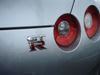
Nissan-Skyline-GT-R1990-1999 Nissan Skyline GT-R
Man, did we ever miss out with this one. The Nissan Skyline GT-R may well have been the best “everyday” performance vehicle of the 1990s, and we never got the chance to drive one – new anyway. The decade would see three different generations of the GT-R come along, each earning a legion of loyal fans.

For the most part, all Skyline GT-Rs were powered by the RB26DETT 2.6-liter turbocharged six-cylinder engine that produced a lot more than the official 276 hp ratings would have us believe. With a killer all-wheel-drive system and track-ready suspension, the GT-R couldn’t be touched by many cars during its time. And, the GT-R was highly tunable.

For those who wanted a little more factory-backed performance, there was the 1997 NISMO 400R that featured a plethora of performance upgrades, highlighted by an increased six-cylinder engine that pumped out a staggering 400 hp.

Why did Japan get to have all these amazing cars?!

By Mike Schlee Jul 24, 2015

Wednesday, January 21, 2009

How To Make Importing Japan Cars From Auctions More Profitable

When it comes to buying used Japan cars, the auction spots are the best places to look for to save huge money. Though the Japan car auction spots are the best places to buy used Japan cars at very cheap prices, there are several things to be noted. Hurrying to an auction spot to buy the cheap used Japan cars will drain your wallet and also will eat up much of your precious time.

If you can spare a little time reading this article, you can really make importing Japan cars from vehicle auctions more profitable.

Find someone to represent you before you head to the vehicle auction spot.

Finding the best deal in the Japanese vehicle auction spots is really hard. It greatly depends on your knowledge about the Japanese automotive industry and your bargaining skills. If you are visiting Japan for the first time, looking for used cars, then you will end up in loosing your time, energy and money. In this case, it is good to find someone who is knowledgeable about the Japan car industry to represent you.

There are many used Japan car exporters who will be ready to help you to find the best deals from the vehicle auction spots. You will just have to give them some cash for representing you. The cash you give them is just peanuts when compared to the cash savings associated with the used Japan car purchase from the vehicle auction spots.

Doing a bit of research in the Internet about the Japanese vehicle auctions will save your timeWith a plethora of information available at your fingertips, finding more information about the Japanese auto auctions in the Internet is no big deal. You can find the location of the Japanese auto auctions by just relaxing in your home. There are many websites that list the used Japan car auctions around the Country. It is better to find the location of the used Japan car auction site using the Internet before you physically head to the location. This will save much of your precious time and also will reduce the physical strain involved in searching the auction spot location.

If you are less aware of Japan used car auctions, it’s better to import them directly by ordering onlineAs already said, importing cars from Japan auto auctions require atmost knowledge about the automotive industry.

However, there is nothing to worry if you are not that vehicle savvy. You can still import used Japan cars at very cheap prices. There are many websites out there where you can buy used Japan cars as easily as you buy other products online.
Just like shopping any stuff online, once you place the order for a Japan used car, the car will be shipped to your doorsteps. All you have to do is to select the used Japan car of your choice with a few mouse clicks.

Plugged to the Internet? Importing a used Japan car is just a click away!


By: Yoichiro Shiba

Monday, January 12, 2009

2009 Nissan GT-R At-A-Glance


2009 Nissan GT-R At-A-Glance


The all-new Nissan GT-R uses a Premium Midship package, an all-new, more advanced version Front Midship (FM) package utilized on other Nissan vehicles.


This new package enables the use of the world's first application of an independent transaxle 4WD system. The transaxle's layout places the dual-clutch transmission, transfer case and final drive at the rear of the vehicle (instead of the usual front location), which enables vehicle weight to be evenly distributed throughout the car.


This gives the Nissan GT-R a superb front-to-rear weight balance, while enhancing leg and foot space and allowing for an optimal pedal layout.


Under the hood, the Nissan GT-R features an all-new 3.8-litre twin turbo V6 "VR38" engine, featuring plasma-sprayed bores and a special twin-turbo exhaust manifold system. A secondary air management system enables the newly designed powerplant to provide approximately 40kg/m of torque during ordinary low-rev driving, which gives an optimum air-fuel ratio for around-town efficiency and helps the Nissan GT-R meet ultra-low emission vehicle (U-LEV) standards in Japan.


The Nissan GT-R's new engine produces 480PS (353kW) at 6400rpm and maximum torque of 60kgm (588Nm) from 3200 to 5200rpm. Putting the power to the ground is an all-new GR6-type dual clutch transmission, with paddle shifting and a Borg Warner six-plate dual clutch for direct control.


Suspension duties are handled through a special Bilstein DampTronic*1 system, which utilizes all pertinent vehicle information to provide appropriate damping forces for all situations and helps maintain a high level of control for straight-line driving, cornering, and braking.


Braking is essential for a daily-driven supercar and the GT-R features large Brembo full-floating drilled rotors, low steel high stiffness brake pads and Brembo mono block six-piston front and four-piston rear calipers, which in combination minimize fade and provide stable braking.


Run-flat tires, exclusively designed for use on the Nissan GT-R, balance high grip and all-weather capabilities and a comfortable ride in all driving situations. The tires are designed to maintain structure for 80km of travel at 80 km/h, while still providing an acceptable level of performance.


High-Performance Safety and Environmental TechnologiesThe Nissan GT-R offers a long list of safety and environmental features, including, for enhanced visibility inside and out of the vehicle, high-mounted LED stoplamps, bright LED rear combination taillights, "super wide beam" headlights, heated door mirrors and flat-blade wipers.


Standard safety equipment includes a pop-up engine hood system for enhanced pedestrian safety, driver and front passenger SRS Air Bag System, ELR front seat belts with tension reducer, front seat belts with load limiter, and three-point ELR rear seat belts. Driver and front passenger SRS Side Air Bag System and SRS Curtain Air Bag System are offered as options.
Environmental technologies include extensive work to create an U-LEV certification in Japan for the 3.8-liter twin turbo engine and reduced levels of volatile organic compound for materials used in the car.


Functional Design - High Performance Aerodynamics and StyleThe Nissan GT-R's styling follows the function over form theory. Every styling aspect, from the overall design to the smallest details, is created to maximize the vehicle's driving experience - as well as suggesting GT-R's "supercar" level of performance. Utilizing advanced aerodynamics, the Nissan GT-R's aggressive styling evokes the lines of a well-trained athlete, combining strong character lines with smooth and solid areas.


The all-new GT-R's body is created with a combination of steel, carbon fiber and aluminum, providing a unique combination of stiffness and lightness. The Nissan GT-R features a low coefficient of drag of 0.27, with high front and rear downforce, which provides the GT-R with enhanced grip in all weather situations, while also enhancing fuel efficiency.


The front fenders express power and stability, while the "aero-blades" on the fenders' leading edges provide optimum airflow around the tires and along the body. The scoop in the fenders' trailing edges assists in providing front downforce and optimization of side airflow.


The aggressive front end, with a large hood budge and single air intake, provides a sophisticated style as well as undisturbed airflow for power and cooling. New "super wide beam" headlights feature three additional sub-reflectors (compared to conventional lights) to give a wider spread to the illumination area.


The Nissan GT-R's large, four-passenger cabin features a sloping "aero blade canopy" roofline and curved C-pillar "sword edge," which expresses the distinctive GT-R identity, as well as facilitating air flow around the rear of the vehicle. The GT-R's hallmark four-ring taillights, efficient rear spoiler and large, integrated φ120 exhaust tips, provides the signature rear view of the GT-R, as well as optimizing airflow along the top and under the vehicle.


The high level of advanced technology is evident even in the Nissan GT-R's paint - which utilizes a "double clear coat" and "anti-chipping" process. The Nissan GT-R features Ultimate Silver as a special new color, which is painstakingly hand-polished by craftsman.


An Interior Suitable for Daily Driving or Supercar DutiesKey to the Nissan GT-R's usability as a both daily driver and a high-performance supercar is its interior, which is designed to balance functionality, a sense of ease, and comfort.


Sculpted performance bucket seats give the driver and passenger a comfortable driving experience, and soft pads are utilized on the dash in front of the passenger and doors to give an extra level of comfort and safety.


The instrument panel surrounds the driver, with all meters and multi-function meter at a uniform height to minimize the driver's head movement when traveling at high speeds. A large center-mounted tachometer, with gear display on its upper right, as well as the easy-to-read graphics of the display, gives the driver instant detailed information, essential for the performance nature of the GT-R.


Functional style is also evident in the Nissan GT-R - each meter features a dial plate design that evokes the idea of engaged gears, as well as a three-dimensional metal-like ring, suggesting the multi-dimensional performance of the GT-R. A large, metallic-framed center console features the ergonomically designed shift lever and a red "engine start" button.


Adjustability is central to the daily-driver nature of the Nissan GT-R, with a special "set-up switch" located in the center of the instrument panel. This switch enables the driver to adjust transmission shifts, shock absorbers and the Vehicle Dynamic Control (VDC-R) in three settings


- Normal, Comfort or R, the high-performance setting designed for the Nissan GT-R "supercar" application.


A high-speed, high-capacity CARWINGS (Japan market) navigation system, with a powerful 30GB hard disk drive, features an easy-to-use touch pad, as well as traditional navigation switches. The screen interface features not only the navigation system, but also an enriched entertainment system with a Music Box hard drive, DVD and CD player, and Bluetooth® *2 audio function.


For special use in the GT-R application, the multi-function meter also includes mechanical and driving information for safe high performance driving, including acceleration opening, brake pedal pressure, and steering angle. It also includes an "optimal gearshift map," to emphasize economical vehicle operation.


A specially designed BOSE sound system includes two forward-facing woofers in the rear center armrest area combined with traditional door speakers. All speakers are mounted in rigid aluminum die cast panels, which combined with the design of the system itself, provide sound quality suitable for a supercar.


Source: Nissan. Edited by JSC Editor

Wednesday, October 8, 2008

Going Green, Japanese Style

DAN HILTON

April 22, 2008

Standing amid a forest of grey office towers, breathing the acrid exhaust from a million Osaka tailpipes, or wandering through residential Tokyo neighbourhoods replete with emission belching factories and residential apartments, Japan's environmental innovations can be difficult to see and even harder to imagine.

Fortunately, Japan is rarely without paradox.

Japanese citizens today use about half as much energy as North Americans, yet have an even more energy dependent lifestyle. Relentless innovation and the nationwide embrace of conservation and sustainability — two characteristic Japanese values — have enabled Japan to reduce its energy consumption while at the same time expanding economic output, a rare accomplishment among industrialized nations.

Bicycles are still used by millions of Japanese commuters every day, and form a key link in Japan's modern and efficient public transportation system.

Here conservation and sustainability are driven not only by environmental interests, but by industrial development, technical innovation, GDP growth, and the endless pursuit of consumer happiness.

For 63-year-old Hiroko Morita, consumer happiness comes by the tankful.
Morita drives a Kei car (kei jidôsha: lightweight automobile). It looks and drives much like a regular compact car, but has disproportionately smaller dimensions. It is taller in height but shorter and narrower in length, yet lighter and astonishingly roomy for its size. It's also incredibly efficient. "It used to cost Y8000 ($77 CDN) to fill my old car's tank," explains Morita, "but this Kei car costs Y4000 ($37 CDN) and goes even farther between fill-ups."

Introduced in 1949 to help Japan's post war economy recover, the Kei car is once again poised to help save Japan — this time from choking exhaust fumes and high fuel prices. Powered by 660cc three cylinder gasoline engines (the maximum displacement allowed in the Kei class), many Kei cars can travel 20 kilometres on a single litre of fuel. They're also cheaper to insure, exempt from annual car taxes, and can be purchased without a police parking permit, required for larger vehicles.

But the greenest cars in the world will soon be a shade greener: by 2009, several Japanese manufacturers plan to introduce battery powered electric Kei cars, which many here hope will help Japan achieve Kyoto Protocol emission reduction targets of 6% below 1990 levels.
In Japan's efforts to reach those targets, the Kei car is not alone. With a public transportation network that includes over 27,000 kilometres of railway lines and uses bullet trains, express trains, subways, streetcars, buses, and plenty of bicycle racks, many in Japan have no need for an automobile, no matter how efficient. Public transportation has become the minivan of the nation, moving millions of people each day with incredible energy efficiency and keeping millions of cars off the roads.

Inside homes and offices, Japan's green technology is even more impressive. In addition to water-saving toilets, on demand hot water heaters, vacuum sealed refrigerators, bath water re heaters, and compact and highly efficient home appliances, new homes can be ordered with hydrogen fuel cells to produce electricity and hot water. And in 2009, the government will provide further subsidies for consumers who wish to retrofit existing homes with the latest fuel cell technology.

Spurred by generous government incentives and climbing fuel prices, lightweight 'Kei' cars now account for over 35% of new car sales in Japan.

Trends come and go with unnerving haste in Japan, but the green trend shows no signs of abating. In home appliance and electronic shops, "low prices" signs have given way to "low kilowatt hour" tags and Energy Star rating labels. Television ads and government pamphlets promote the benefits of living cleaner, greener lifestyles. Recycle shops and flea markets, once unthinkable in Japan, can now be found in most Japanese cities. And in business and government buildings, "warm biz" and "cool biz" programs encourage thermostats to be turned down and air conditioners to be used sparingly.

Japan's environmental knowledge is now an export commodity, and goes far beyond hybrid automobiles, home use fuel cells, and low power appliances. In 1992, Japan's External Trade Organization (JETRO) launched its Green Aid Plan (GAP) to enable the transfer of energy and environmental technology to developing countries in Asia and around the world. The goal is to reduce the environmental impact of rapid industrialization, something Japan knows all about, having made many of the mistakes itself.

It's also developed many of the solutions: since the 1970's Japan's industrial output has nearly tripled, but its energy usage has remained almost flat. As a percentage of GDP, the Japanese are the lowest users of energy in the developed world. They are also one of the highest re users of energy in the world. Nationwide recycling — which sees business and household waste washed, sorted, recycled, and often reprocessed into fuel used to generate electricity — helps ensure waste energy isn't wasted.

Alternative sources of energy such as wind and solar also contribute an increasing amount to Japan's domestic energy supply. Since 2003, the government has required energy providers to source specific quotas of energy from alternative domestic sources, such as solar energy that now contribute over 1.4 million kilowatts of power to Japan's grid.

Even with new technologies and forward thinking policies, there is a sense one lives on borrowed time in Japan. "As for climate change, it may be too late for we Japanese," explains 78-year-old Hiroshi Yamashita, a retired university professor who now collects vinyl recordings and tends a miniature forest of backyard Bonsai trees. "When sea levels rise, Japan will become Fuji Island."
Innovation has always been Japan's only hope, and the desire for energy autonomy, economic growth, and technological innovation is also a desire for survival. So it is for us all.

The cliché that Japan is "the future" has never been more compelling, because ours is a shared future of having to do more while using significantly less energy. In this sense, Japan is so ahead of the curve, it's almost out of sight.

Green drivers turn to small, fuel-efficient Japanese imports

As governments encourage Canadians to reduce the automobile's environmental footprint, Les Smith believes he's already done his part thanks to his decision to purchase his Honda Acty.

"It looks like one of those big Hino trucks, only it's been through the wash," says the Vancouver school board worker. "It's very tiny."

The diminutive pickup truck belongs to a class of Japanese vehicle know as kei jidosha — literally, lightweight vehicle. They must conform to strict size and power limits, but in return get generous government tax breaks and special parking privileges in Japan's auto-choked cities.

Sales of kei cars and trucks, as they're called, have boomed, accounting for about a third of the total in a country where gasoline prices are only slightly higher than Canada's, but where conservation is fostered because Japan relies totally on imported oil.

Minicars, including models slightly larger than Japan's kei class, make up about 35 per cent of auto sales in Europe, where drivers pay the highest fuel prices in the world.

The challenge of putting comfort, space and driveability into a tiny package has often pushed designers and engineers in innovative directions. The 2007 Mitsubishi "i" was named Japan's car of the year.

Ottawa promises green tax credits

Environmentalists and transportation specialists believe minicars could be part of the solution to growing urban congestion and to reduce greenhouse gas emissions.

'What we found with the Smart is you could have a safe vehicle that was small and still fuel efficient.' —Patricia Procter, Transport Canada

Ottawa and provincial governments are encouraging the purchase of gasoline-electric hybrids through tax credits. Vancouver offers 50 per cent discounts for fuel-efficient vehicles parking on city-owned lots.

Federal Transport Minister Lawrence Cannon also announced this month it was expanding research into environmentally friendly vehicles through a new ecoTechnology program.
Transport Canada program manager Patricia Procter says her $15-million, four-year budget almost quadruples the money the previous Advanced Technology Vehicle program had available to evaluate promising automotive technologies such as battery-electric and fuel-cell vehicles.
"Our goal is to not only show the consumers what could be available, but actually work and have some tangible results that we would share with the auto industry and the consumers about the benefits of introducing them into Canada," says Procter.


4,000 Smart Cars sold in 2005

The earlier program looked at a number of vehicles, including several Japanese kei cars and trucks, but didn't have the money to do rigorous testing, says Procter. It did manage to facilitate the introduction of Mercedes-Benz's Smart car, a diesel-powered two-seat urban runabout, in 2005.


The company sold about 4,000 Smarts in its first full year but sales slid to just over 3,000 last year — still ahead of expectations, says spokeswoman JoAnne Caza.

Based on surveys and her program's displays at auto shows, Procter says there's some appetite among consumers for small, fuel-efficient vehicles, at least for city use. But North American motorists remain leery of tiny cars in their world, where trucks and SUVs rule the road.

"Consumers had a big fear of the size of vehicle. If it was small it wasn't really safe," Procter says of the car show feedback. "What we found with the Smart is you could have a safe vehicle that was small and still fuel efficient. Large doesn't necessarily mean better."

Tuesday, September 2, 2008

1993 TOYOTA ARISTO 3.0V Twin Turbo

FOR SALE: 1993/06 Toyota Aristo 3.0V


ENGINE: 3.0L Twin Turbo


DRIVETRAIN: RWD, AUTOMATIC


COLOUR: Silver


STYLE: 4 Door Sedan


KILOMETER'S: 104,000 KM'S


OPTIONS: POWER WINDOWS, POWER LOCK, POWER STEERING, AIR CONDITIONING, INTERMITANT WIPERS, POWER DRIVERS AND PASSENGER SEATS, POWER STEERING COLUMN, POWER SUNROOF


Timing belt was changed last year at 97,000 km's. The engine is very smooth and quiet. Interior and exterior condition excellent.

Check my website for more vehicles: www.jdmimports.ca


FOB Osaka: 600,000 yen. or $5700 CDN


1993 SUZUKI ALTO WORKS TURBO

FOR SALE: 1993 SUZUKI ALTO WORKS TURBO


ENGINE: 660cc INTERCOOLER TURBO


DRIVETRAIN: FRONT WHEEL, AUTOMATIC


COLOUR: BLACK / GOLD TRIM


STYLE: 2 DOOR / HATCHBACK


KILOMETER'S: 33,000 KM'S


OPTIONS: POWER WINDOWS, POWER STEERING, AIR CONDITIONING, INTERMITANT WIPERS, REAR WIPER, REAR SPOILER, AFTERMARKET SUZUKI CAR MATS, ALL WINDOWS ARE DOT AND HAS REAR HIGH MOUNT BRAKE LIGHT.


ALTHOUGH THIS WAS A 3.5 GRADE VEHICLE AND MECHANICALLY SOUND, THE EXTERIOR OF THE VEHICLE DID NOT MEET OUR STANDARDS WHILE THE INTERIOR WAS IN PERFECT CONDITION. ONCE I GOT THE VEHICLE I DECIDED TO BRING IT UP TO PAR:

*NEW BLACK PAINT W/ PERAL

*NEW PAINT ON THE EXTERIOR TRIM MOULDING (THIS WAS TAKEN OFF AND PAINTED SEPARATELY, SO UNDER THE TRIM IS BRAND NEW BLACK PAINT AS WELL)

*4 NEW GOODYEAR TIRES 165/60/13

*NEW SPARK PLUGS

*NEW BATTERY*NEW AIR FILTER

*NEW OIL FILTER*OIL CHANGED

*ENGINE BAY STEAM CLEAN*EXTERIOR DETAIL

*INTERIOR DETAIL

YOU CAN LOOK AT SOME BEFORE AND AFTER PICTURES ON MY WEBSITE; http://www.jdmimports.ca/


THIS CAR DOES LOOK AND DRIVE LIKE A NEW CAR.THE ONLY ISSUE I HAVE WITH THE CAR IS THE PREVIOUS OWNER DID NOT DO A GOOD JOB WIRING HIS DOOR SPEAKERS AND INSTEAD OF GOING THROUGH THE DOOR HINGE AREA JUST BYPASSED IT AND WENT THE EASY WAY. NO DAMAGE BUT HAVE TO LET YOU KNOW.

FOB JAPAN 600,000 YEN

Tuesday, July 22, 2008

Importing a Japanese car into the UK Blog

written by:

http://www.donsautopages.co.nz/japaneseimports.htm#importers

Ok, so you know you want the Daihatsu Micro-MPV...

I know I do, and I want one really bad I can hardly wait.

If I could snap my fingers and have it appear within minutes, that would be great. But it won't. This is because you can't buy one in the UK. What has Daihatsu been thinking - here is this perfect van, just introduced into the UK about a week ago, and they offer ZERO options and ZERO chance of buying an MPV. Talk about excluding someone like me. Someone who wants to load it up with large garden plants and supplies, DIY items, new furniture - everything to fix up my new house, AND be useful for visiting familiy and in case I should have a bunch of kiddies one day. Oh, and it has to fit inside my garage.

But enough about that dream.. I've been doing extensive research (I can read Japanese) and what I can tell you is this. It is scary out there. There are hundreds and hundreds of Japanese car importers out there I can't believe it. The question is - who can I trust? I've heard that there are scam artists out there who buy cars that have been in an accident and sell them as in good condition. Also scamers who disappear after you've wired Japanese Yen to them. I don't like scammers and I don't like to think of myself as someone who will be the scamee. Therefore, my first few efforts were to gather enough information so I knew what was going on.


What's Going On??

It all goes back to the Auto Auction. How many importers tell you that? In Japan, used car auto auctions are held each week in varying locations across Japan. The car condition is listed in Japanese for each buyer and the auction is conducted through the use of under-counter bid buttons and large LCD screens which display the cars. 


Did you know that in Japan, thenew 2004 EXTOL is also sold as a micro-MPV known as the ATRIA?

The Micro-MPV is sporty, tiny and has the hidaway seat advantages of the Honda Odessey and Ford Freestar. For a fraction of the price.

This Blog exists to show you what is involved in importing your Daihatsu Extol MPV through us or on your own. Models 1999, 2000, 2001, 2002, 2003 and 2004 will be discussed. (you can't get a 2005 yet!). Why do I want to import a Daihatsu MPV?

ADVANTAGES:

* No Commercial Vat
* Extras like 4 wheel drive, automatic transmission, windows, folding hidaway seats
* Extra storage
* Cupholders!
* Small - will fit in almost any parking space
* 34+ miles per gallon
* Looks stylish in colors other than white
* Can fit the family, or fit lots of furniture, and stuff from Costco runs
* Easier to drive
* Different body treatment options
* Cheaper than a van conversion
* Has the same amount of useful space as regular sized MPV's
* Great price
* You'll stand out from the crowd - where did you get that?!! 

Did you know that Daihatsu makes a micro-MPV in Japan?

The Micro-MPV is sporty, tiny and has the hidaway seat advantages of the Honda Odessey and Ford Freestar. For a fraction of the price. This Blog exists to show you what is involved in importing your Daihatsu Extol through us or on your own. Why do I want to import a Daihatsu MPV?

ADVANTAGES:
* No Commercial Vat
* Extras like 4 wheel drive, automatic transmission, windows, folding hidaway seats
* Extra storage
* Cupholders! * Small - will fit in almost any parking space
* 34+ miles per gallon
* Looks stylish in colors other than white
* Can fit the family, or fit lots of furniture, and stuff from Costco runs
* Easier to drive
* Different body treatment options
* Cheaper than a van conversion
* Has the same amount of useful space as regular sized MPV's
* Great price
* You'll stand out from the crowd - where did you get that?!!

Wednesday, May 21, 2008

KEI FUN BY MICHAEL KNOWLING

Kei Fun
A look at the most unlikely performance cars you'd ever imagine - the Japanese Kei class turbo guns!
By Michael Knowling


They're the smallest mass-produced cars in the world and they have engine capacities around half a litre. So you reckon we're talking about a boring commuter box with wheels? Guess again! Japan's Kei class performance cars are some of the most enjoyable to drive surprise packets on the road. That's right; park your big block in the shed and get started upsetting the establishment in a sub 1.0-litre ball of f-u-n!


For those unaware, Kei cars are vehicles that meet certain body dimensions, engine capacity and power regulations set by the Japanese government. In addition to costing bugger-all to run, the Kei classers make a lot of sense given the lack of parking spaces in many areas of Japan, and - furthermore - they attract very worthwhile registration sweeteners.
The first group of Kei cars were limited to 360cc engines (including 2-strokes!), but this later grew to 4-stroke 550cc motors (with a maximum of 42ps or 31kW) and then - as you'll see - 660cc motors (with up to 64ps or 47kW).
So let's now take a look at the Kei performance cars in chronological order...

The Emerging 550cc Terrors

Prior to the introduction of the Kei class performance cars, it was Honda in 1982 that offered the nearest thing - the Honda City Turbo. Powered by an ER-series SOHC, 1.3-litre four-cylinder - with just a 7.5:1 compression ratio - the 'bulldog' look Honda pumped out a creditable 74kW at 5500 rpm along with 147Nm of torque at 3000 rpm. No question, the little Honda scooted its 690-kilogram kerb mass quite capably.

Although still considerably larger than a Kei class vehicle, it was Nissan that took small car performance to the next level of performance and sophistication in the early '80s. Its Garrett turbocharged E15ET engine - displacing 1.5-litres - used a 8.0:1 compression and pumped out an impressive 85kW at 5600 rpm and 167Nm at 3200 rpm. Note that Nissan used the same E15ET engine in a number of vehicles from late '83 - the 1500 SSS Liberta, Laurel Spirit, Sunny, Langley and, of course, the Pulsar and EXA models as seen in Australia.

Daihatsu, meanwhile, was heading further in the direction of what would eventually be the Kei high performance class. Its 1983 released G11 Charade turbo used a three-cylinder engine of just 993cc and - equipped with an IHI turbo blowing through a carburettor - it was rated at 59kW at 5500 rpm and 118Nm at 3500. Like the Honda and Nissan, the Charade turbo ran without any form of intercooling.

The turbo Charade was released as both a 4-door hatch (as delivered to Australia) and a 2-door hatch, with kurb weights of just 685 to 720 kilograms. A DeTomaso version - with the same output - was released in latter years.

In late 1983, it appears that Daihatsu's Mira turbo debuted as the first hot Kei class ever. Using just a carby fed two-cylinder chugger displacing 550cc, the tiny terror employed a 8.2:1 static compression ratio and 'punched out' the maximum allowable 31kW at 6000 rpm with 56Nm at just 2500 rpm. The car itself, though, was very humble - the L55-series chassis (recognised as the first model Handivan in Australia) rode on a beam rear axle, 10-inch steel wheels and was only ever intended as a delivery vehicle... Oddly enough, a jacked up 4WD turbo version of the L55 Mira turbo - with slightly less power but greater torque - was released the following year; go figure!

MMC - Mitsubishi Motors Corporation - was next on the bandwagon with its hot Minica. Available only as a two-door, the Minica used a G23B SOHC carburetted 546cc three-pot with a 8.5:1 compression ratio, good for 30kW and 57Nm at 6000 and 3500 rpm respectively. The weight of the Minica? Just 560 kilograms!

Subaru and Suzuki were the next manufacturers to recognise the demand for pint-size cars with squirt.

In 1984, Subaru brought out the 2-door Rex turbo hatch (similar to the Sherpa in Australia); using an EK23 SOHC 544cc three-cylinder motor, the IHI turbocharged Rex (not to be confused with WRX!) put out slightly shy of the maximum Kei class power output; 30kW at 6000 rpm and 58Nm at 3500 rpm. Like the Daihatsu Mira, a 4WD version was also released but added around 85 kilograms to the kerb mass.
Suzuki, meanwhile, challenged with its new Cervo turbo - another 2-door only hatchback. Using a SOHC F5A 543cc three, the little Suzuki spat out a mild 29kW at 6000 and 54Nm at 4000 rpm. Interestingly, the same engine was mounted longitudinally in the Suzuki Jimny (aka Sierra) off-road 4WD.


In late 1985, Nissan edged closer to the Kei category with its March turbo, which was a slightly larger 710kg 2-door hatch. The March's MA10ET engine used a 8.0:1 compression ratio to generate 63kW at 6000 rpm and 118Nm at 4400 rpm. In many ways, it was simply a downscaled Pulsar ET; still not quite Kei material, though.


Daihatsu responded to its growing competition in late 1985 with an all-new version of the Mira/Cuore (known in Australia as the L70 Handivan). Boasting a much more up-to-date design with IRS, the turbocharged Mira TRX-X - apparently only available as a 2-door hatch - ditched the rough ol' 2-cylinder engine to make way for a new EB 547cc three cylinder with an IHI turbocharger. Output went beyond anything seen in its class, with 38kW (woo-hoo) at 6500 rpm and 70Nm at 4000 rpm. Weight, meanwhile, was kept down to around 570 - 590 kilograms depending if you bought a 2 or 4-door hatch version. Its no surprise the powerful new Mira became the top performer in the little league.


Again, a 'high-rise' 4WD turbo version - with a more basic live rear axle - was released the year after the L70's initial release; think of a full-scale Tonka toy and that's pretty well what this vehicles looks like...

The power war was surely on by this stage.

It wasn't long before Suzuki churned out its first Alto RS. With a F5A SOHC 550cc motor ticking under the bonnet, the Alto RS put out a substantial 35kW at 6000 rpm, but with a relatively modest 64Nm at 4000 rpm. The RS was a front-wheel-drive 2-door weighing just 580 kilograms, while a 4WD version - the Alto SX - added a further 60 kay-gees.

For 1987 MMC updated its Minica range bringing with it an all-new turbo model. A new 3G81 548cc three-cylinder replaced the G23B and upped the ante to a healthy 37kW at 6500 rpm and 66Nm at 3000 rpm. Riding proud on its 12-inch rims, the Minica was a very close competitor for the L70 Mira TRX-X - that is, until Daihatsu once again struck back...


The EB 547cc motor in the Mira TRX-X from late '88 got bumped up to a class-leading 43kW at 6500 rpm and a very sunny 73Nm at 4000 rpm. Weight was still kept down to under 600kg in both the front and optional four-wheel-drive models.

Also at this time, Daihatsu replaced the G11 Charade turbo - with its SOHC carby turbo motor -with the larger G100 Charade GTX-X boasting an awesome DOHC, 12-valve, EFI, 993cc three-pot putting out an incredible 77kW at 6500 rpm and 130Nm of torque at 3500 rpm. It's no wonder this little slogger went on to considerable rally success.

Mightier Midgets!

For 1988, Japan's Kei class formula was revised to allow slightly larger vehicles but, more importantly, engine capacities were allowed to swell to 660cc and the maximum power output was lifted to 64ps (47kW) - an overnight 52 percent increase in grunt!

The new era of Kei performance kicked off with vehicles such as the revised L200 Daihatsu Mira Turbo. Sporting a new EF-JL 659cc three-cylinder with a SOHC, 12-valve head, EFI and a small top-mount air-to-air intercooler, the revised monster Mira made the regulation 47kW at a high 7500 rpm plus 92Nm at 4000 rpm. The new Mira was available in both 2 and 4-door hatchback form and came with optional 4WD and 4WS.
Subaru's Rex underwent a dramatic change with the new regulations. Oddly, it ignored any allowable increase in capacity and, instead, exchanged its turbocharger for a little positive displacement supercharger fitted to a new EN05 SOHC 547cc mill running EFI, an intercooler and a 8.5:1 compression ratio. Output was 45kW at 6400 rpm and 75Nm of torque at 4400 rpm. All-wheel-drive was, of course, available to buyers.

One of the trickest of all Kei class turbocars appeared during 1989 - the Suzuki Alto Works RS/R. Undeniably eye catching with its round headlights and tough body kit, the all-wheel-drive RS/R used a F5B 547cc, DOHC, EFI, air-to-air intercooled engine pumping out 47kW at 7500 and 77Nm at 4000 rpm. Note that a front-wheel-drive version of the Alto turbo - the Works S/X - was also available with slightly detuned form.
For 1991, the Alto Works' engine was swapped to something a little more serious - a 658cc F6A DOHC design, which allowed the 47kW max output to be attained at lower revs - 6500 - as well as a strong 90Nm of torque at 4000 rpm.
The 'non Works' turbo version of the Alto, meanwhile, used a slightly less grunty 657cc DOHC F6B engine.

In 1989, the new MMC Minica Dangan ZZ4 - arguably one of the hottest Kei classers to this day - hit the scene making the most of the new regs. With its striking looks (and a triple outlet exhaust tip!), the Dangan ZZ4 sported a 3B83, DOHC, 15-valve, three-cylinder with an intercooled turbo giving the regulation 47kW of thrust at 7000 rpm. Peak torque was a class leading 94Nm at 3500 rpm, ensuring the all-wheel-drive ZZ4 - which weighed just 720 kilograms - was no slouch. In later models, torque was also upped to 96Nm at the same 3500 rpm.


A new 'bubble' Minica hit the streets in 1993 employing a new generation 4A30 659cc, DOHC turbo intercooled motor cranking out, of course, 47kW at 7000 rpm and a mammoth 97Nm at 3500 rpm. Weight though, had crept up to 780 kilograms.

For 1990, Subaru upgraded its Rex turbo hatch from disadvantaged 547cc capacity to a full 658cc. Remaining faithful to the concept of supercharging, the new EN07, SOHC, EFI, air-to-air intercooled mill put out 47kW and 84Nm at 6400 and 4400 rpm respectively. This little tuffy sported AWD and weighed around 730kg.

Rex got bitten, though, when the Subaru Vivio replaced it in 1993. The 730-kilogram Vivio featured much better design and retained the EN07 supercharged engine with the same outputs. A model change in later years saw a boost to 90Nm at 4000 rpm.


How Fast?

You may be wondering how fast the little Kei class rockets are. Well, given the 660cc examples are all limited to 47kW and hover around 750 kilograms in mass, they're all pretty well line-ball in straight-line acceleration - expect 9 - 10-second 0 - 100s, with mid-ish 16-second quarter miles.

But there's no reason to stop there...

With minimal weight to haul around, even relatively small power-ups can give these cars a sizeable increase in performance. Add a high-flow exhaust, air intake, enhance the intercooling and up the boost and you've got an easy low 15 flier. We've even seen some of these beasts crack into the 13s with standard internals!

Y-eah!


Mazda decided to make an appearance in the Kei performance class with its gull-wing AZ-1 rear-drive sportscar. Using a mid-mounted 657cc F6A Suzuki engine good for 47kW at 6500 and 85Nm at 4000 rpm, the 720-kilogram 'racecar' was a very unusual twist. To this date, they remain rare and extremely collectable.

Suzuki - with its open-top Cappuccino - then extended the rear-drive Kei class theme. Using a F6A DOHC turbomotor with exactly the same outputs as the AZ-1, the Cappuccino was a very close rival for the Mazda - they even had identical weight! From 1993, though, the Cuppa then served up a terrific 103Nm at 3500 revs with the move to a new DOHC K6A motor.


Note that the 1993 Suzuki Alto Works RS/R also benefited from fitment of the new K6A at the same time, making it the undisputed King of Kei hatches.

Through the mid '90s, Daihatsu began to broaden its Kei class appeal. The AWD Mira R4 received a JB-JL DOHC, 12-valve, 659cc turbo engine (making 47kW and 100Nm) and that same powerplant also came out in the Daihatsu Move; yep, even a Move can be made to move!
The Daihatsu Max and Opti also came out with an EF-DET 649cc, DOHC, 12-valve turbo with 47,000W and an outstanding 107Nm of torque - the highest we've seen from any Kei car.
The new Atari wagon and updated Move RS Limited got the same engine to propel its 860-odd kilogram mass. The Daihatsu Terios 'Kid' and Naked wagon (don't ask!) are also endowed with 649cc turbo power.

In the late '90s, MMC's Minica started looking a bit strange but it still delivered a good punch; with a newly designed KA30, DOHC, 15-valve intercooled turbo engine making 47kW and 97Nm, it was quite competitive. It appears that the same KA30 turbo engine comes fitted to the intriguing MMC Toppo BJ wagon (seen here), which is based on the Minica chassis.

Combating the Daihatsu Move and Atari is Suzuki's Wagon R with its K6A, DOHC, 12-valve turbocharged three that matches the Daihatsu for power, but is slightly shaded with 103Nm of torque.

Also in the Suzuki stable is the creatively named Kei, which is based on the Alto; the K6A engine is also available in this vehicle.

To date, Subaru's supercharged EN07 SOHC motor still lives on in the new Pleo. In its current guise (as at 2002) it is making 47kW at 6400 rpm together with 89Nm at 3600 rpm; its numbers aren't as impressive as the turbocharged opposition, but the EN07's forte is strong low torque and good response.

With the huge selection of Kei performance engines and complete cars available for a relative pittance outa Japan, we reckon there's no good reason to overlook them; just imagine the satisfaction of chopping your neighbour's HSV with a souped-up shopping trolley!

So go on - either drop a turbo (or supercharged) import engine into a locally delivered small-car or nag your local Japanese importer to bring you a complete car for compliance. Do whatever it takes!

THE INCREDIBLE SHRINKING MARKET


The Incredible Shrinking Car Market
Thursday, May. 17, 2007 By BRYAN WALSH/TOKYO


Tiny and cheap cars are the rage in Japan
From top: Mitsubishi Motors Corporation; Daihatsu Motor Co., ltd.


You'd have to be living under a rock—or perhaps driving a Ford Pinto—to be unaware that Japanese auto manufacturers have conquered foreign markets. Toyota recently passed GM to become the world's largest carmaker, and even runner-up brands like Honda are in better shape than their struggling American counterparts. But back home, the news isn't so golden. Thanks to an aging, shrinking population and lackluster consumer spending, sales of full-size vehicles in Japan last year were the lowest since 1977. Mighty Toyota may have posted a record global profit of $18.6 billion for 2006, but its home-soil sales slumped 4%.
Related Articles


Yet there is an unexpected bright spot. Sales of minicars—tiny, inexpensive vehicles powered by glorified motorcycle engines—rose 5.2% last year to reach 2.02 million, a record high. More than one out of every three cars sold in Japan in 2006 was a mini, or kei, making the country by far the biggest market in the world for these runty runabouts. Offering affordability—most are in the $10,000 price range—and impressive fuel economy of around 20 km per liter, Hello Kitty-cute kei could play a big role in the future of Japanese transport. "It's a good bet that minis are going to be an increasing part of Japan's auto market," says Christopher Richter, Tokyo-based auto analyst for investment bank CLSA.


Japanese minis were once dowdy, spartan econoboxes purchased mainly by consumers who couldn't afford anything better. Japanese called them "perseverance cars" because drivers had to put up with cramped passenger compartments and anemic 50-h.p. engines. That began to change in 1998, when government restrictions on maximum minicar size (owners are eligible for discounts in annual car taxes worth at least $200) increased to 3.3 m long and 1.5 m wide. The bump in dimensions gave manufacturers creative space to build better, roomier models—most now have four doors—and alleviated consumer concerns about safety and comfort. "I feel perfectly safe in a minicar," says Ayako Yamamoto, a 57-year-old housewife in Nagasaki prefecture whose family owns a kei and a minitruck. "The interior is very spacious, and it drives just as well [as a full-size car]."


Make no mistake, kei are dinky even compared with conventional subcompacts. The popular Daihatsu Move, for example, is 28% smaller on the outside than BMW's iconic Mini. Social and demographic trends in Japan—a country known for its affinity for bonsai and miniature electronics—appear to favor tiny, frugal cars. Young people are postponing or forgoing marriage and children, lessening demand for family-sized autos. For retirement-age baby boomers, minis make practical second vehicles; they are especially favored by obasans, older housewives like Yamamoto who have been the kei's most faithful customers. In Japan's less prosperous regions, minis easily outnumber full-size cars. "Japanese consumers don't need big cars to show off their life," says Masa Ogawa, managing director for the automotive industry group at research firm J.D. Power. To many Japanese, "a car is just another tool."


Indeed, the best-selling kei such as the Move and Suzuki's Wagon R are practical and conservative. But manufacturers introduced 11 new models last year, among them sportier, more technologically sophisticated cars geared for younger buyers. Mitsubishi automotive designer Akinori Nakanishi likens the company's new Mitsubishi i to an iPod Nano on wheels, down to the bright colors. (A deluxe version comes with a docking port for a Nano and a satellite navigation system.) Mini design might sound like dull work—tight budgets, less room for bells and whistles—but Nakanishi says his team welcomed the challenge of coloring within the lines. "It's like baseball," he says. "The reason why baseball is fun is because you have rules. Playing around with the restrictions is actually fun."


With fuel prices likely to remain high and awareness of the environment growing globally, small, efficient cars are beginning to gain traction not just in Japan but all over the world. For example, DaimlerChrysler plans next year to begin selling its two-passenger Smart mini in the SUV-loving U.S. At the same time, most of the world's major automakers expect to produce low-cost subcompact cars for growing middle classes in China, India and other developing countries. Yet the market for kei is likely to remain largely restricted to Japan. That's partly because profit margins are too low to justify international sales. Daihatsu sells some of its minis in Southeast Asia and is working on a deal in China. But Suzuki—Japan's top minimaker until Daihatsu passed it last year—is reducing mini production in favor of subcompacts and compacts. "Minicar engines made for the Japanese market are too small," says Yoichi Kojima, a spokesperson for Suzuki. "Here you have only four passengers, but in India, for example, you need space to pack in as many people as possible."


Even in Japan, the market appears to have limits. Kei sales in April fell 6.4% from a year earlier, the first drop in 16 months. The slump is unlikely to last, however. "Over the long term the minicar market is expected to grow continuously," says Tsuyoshi Mochimaru, an auto analyst for Deutsche Securities in Tokyo. When a country's population shrinks, apparently so do its cars.
with reporting by Yuki Oda and Toko Sekiguchi/Tokyo

Sunday, November 4, 2007

Cheap Japanese used cars are not always good


By Shiotsu


Many times our potential customers complain that our prices are little higher compared to those of some other Japanese used car exporters. Then I tell them why those used cars are so cheap.


There are many used vehicle vendors who specialize in cheap cars. How do they keep their prices so low? Their secret lies in the fact that they buy only damaged cars or very low grade cars, for prices as low as 10,000 yen or sometimes even free. Then they replace the damaged parts by cheap used parts and make cosmetic changes so that the car looks like any other car. However, the reliability of such refurbished cars is very low. So you’ll get what you pay for.


We, on the other hand, buy our vehicles from our network of reliable used vehicle dealers and auto auctions. We only buy vehicles having good auction grades and history. Our in-house mechanics test drive these vehicles to make sure that there are no other problems which are not mentioned in the auction grade reports. That’s why the vehicles we supply are of very high quality. And that’s the reason we have many repeat customers. In fact our margins are one of the lowest. We just want to make sure that our customers are happy and they get the quality what they pay for.

Monday, July 23, 2007

21 Reasons for exporting a vehicle from Japan

Written by: Ascent Trading Ltd.


Introduction

There has never been a better time to import a used car from Japan and save big dollars. Exports from Japan have been steadily increasing for the last three years as more and more dealers, wholesalers and private buyers around the world realize this great opportunity.

Reason #1: Wide product range

Due to the very competitive domestic Japanese car market, there are an abundance of models and manufacturers in Japan manufacturers including Toyota, Nissan, Honda, Mazda, Mitsubishi, Fuji Heavy Industries (Subaru), Suzuki and Daihatsu.

Reason #2: K-class Mini Cars

This is a new type of car which has been created in Japan to address Environmental concerns, demand for fuel efficiency and the general the lack of space on Japanese roads. All K-class vehicles meet a specification which restricts the weight, engine displacement (maximum of 660cc) and exterior dimensions. K cars have excellent cost performance are in growing demand around the world.

Reason #3: Excellent Japanese road conditions

Despite the lack of space, Japanese roads are extremely well maintained meaning normal wear and tear which might be attributed to poor road conditions in other countries is not a problem in Japan.

Reason #4: Average vehicle age

The average age of all vehicles on Japanese roads is almost sure to be lower than most other countries. It is unusual to see cars older than 15 years on the roads at all. The Japan Automotive Manufacturers Association (JAMA) reports average vehicle age to be approximately 5.8 years.

Reason #5: Higher model specifications

Due to an abundance of models from each manufacturer and the Japanese penchant for new electronic and other gadgetry, the specifications of a Japanese vehicle produced for the domestic market will usually be much higher than foreign-produced equivalents. This means you can buy a Japanese export model with all the features you like for the same price as a base model bought domestically.

Reason #6: Low mileage

Most Japanese live in cities which lack space and are very dense in terms of population. Since everything necessary to live a comfortable life is within close reach for the typical Japanese, domestic drivers average mileage is typically less than half that of other countries. The Japanese Motor Vehicle Inspection Registration Association reports average mileage for Japanese domestic drivers to be around 9,000km annually. American drivers, on the other hand, drive and average of 19,000 kms each year.

Reason #7: Relative cost

Even after taking into account costs such as freight and local compliance it is almost always cheaper to import a used car from Japan than to buy an equivalent used car locally. There are several reasons for Japanese exports being so cheap, primary amongst them is the mandatory Japanese vehicle safety inspections which effectively increase the cost of ownership as the vehicle ages.

Reason #8: Excellent resale value

Japanese cars, particularly Toyota and Lexus, generally hold much more of their value over the lifetime of the product than foreign counterparts such as Ford and GM.

Reason #9: Highly efficient automated auction systems

Instead of purchasing from private sellers or through local used car dealers whose reputation and business practices may be circumspect, used Japanese cars may be purchased at wholesale prices through very efficient auction houses run by Toyota, Nissan and other reputable companies. Each vehicle placed into an auction is photographed, inspected and graded and this information is useful, accurate and available to potential buyers.

Reason #10: No need to deal with sleazy local used car salesmen

It is an unfortunate fact that the used car industry around the world has the reputation of being filled with unsavory types who deceive and lie in order to gouge their customers on every deal. Whether this is true or not, buying a Japanese export car removes the need to deal with these individuals at all.

Reason #11: Japanese cultural habit of always buying new

Typical Japanese drivers are loathe to buy a car that someone else has used, regardless of the value proposition inherent in doing so. Thus Japanese customarily purchase new cars every 5-7 years, creating a pool of high quality, low mileage, high-spec used cars ready for resale around the world.

Reason #12: No need to waste time and money with private sellers

It is well know that buying a used car from a private seller is sometimes a good way to find a bargain, but this kind of purchase may be quite risky for a buyer who is not mechanically inclined. It can also be very time consuming dealing with private sellers, trying to schedule meetings and test drives and traveling around town to inspect vehicles which are often not as advertised. .

Reason #13: Abundance of Japan-based used car exporters and specialists

Since Japan represents the second largest vehicle manufacturing country in the world and the number of exports from Japan are growing every year there are many exporters and specialists who can assist you in sourcing and exporting your car. Due to the number of people vying for your business you can choose an exporter that you like and gain very competitive pricing as well.

Reason #14: Japanese safety regulations

The Japanese roadworthy testing system is a positive for two reasons: (1) All Japanese vehicles are subjected to exhaustive bi-annual testing and mechanical checks to ensure they are well maintained and (2) gaining roadworthy (called Shaken in Japan) usually costs a lot, artificially inflating the ongoing running costs year by year as the car gets older. The latter is one of the primary reasons Japanese drivers trade up to a new car so quickly and so often.

Reason #15: Increasing shipping capacity and shipment options

Many vehicle transportation companies are increasing their capacity to freight both new and used vehicles from Japan due to growth in this market. For individuals wishing to purchase 2-4 cars at a time shipment by container is also an option which may be faster, more secure and possibly cheaper depending upon the destination port.

Reason #16: Availability of objective information

On the internet today there are many automotive review sites dedicated to the provision of accurate, timely and objective data for all types of Japanese cars. It is no longer necessary for individual buyers to rely on salespeople or manufacturer marketing literature to gain an accurate understanding of specifications, prices and vehicle conditions prior to purchase.

Reason #17: Auction assessments and evaluations

Every auto auction house in Japan performs mechanical tests and assessments by trained technicians prior to entry of the vehicle at auction. These evaluations are very detailed and accurate and include all pertinent information along with grading for the exterior and interior of the vehicle.

Reason #18: Flexible payment terms

While most exporters prefer to be paid via telegraphic transfer, credit card/paypal payments and payments via letter of credit are becoming more common. Most exporters are open to alternative payment methods and the foreign buyer may also consider escrow services if hesitant about sending large sums of money abroad for the first time.

Reason #19: No need to speak Japanese

Due to the huge market which has developed in used Japanese car exports there are many people from many different nations involved in this business. Buyers from Pakistan can communicate with exporters in Urdu. Buyers from Russia can speak in local dialects with Japanese exporters in Northern states, where Russian speakers are common. Almost every Japan-based exporter speaks English too. You do not need to worry about communication problems.

Reason #20: Availability of parts

While Japanese domestic models are usually higher spec than their foreign-manufactured equivalents the fact that so many Japanese manufacturing plants exist around the world mean that common parts for popular vehicles are likely to be available cheaply in local markets. In the event that a part is not available domestically, there are many parts specialists who can help in locating a required part.

Reason #21: Trucks, buses ands machinery also available

While used cars are currently the most popular automotive export, sourcing of buses, trucks and machinery is also becoming more common. Japanese trucks are mostly purpose-built, while those manufactured in other countries are not. Thus it is possible to obtain the perfect truck for the job at hand by exporting it from Japan. Once again, the quality and value of these items exceeds what could normally be attained locally.

Conclusion

Buying a new or used car from Japan is a great way to get your dream car and save money doing it. Although it may not be the quickest way to buy, more and more satsifed buyers are taking advantage of this great opportunity. Since the purchase of a car is usually a major decision and an expensive proposition, exporting your next car from Japan is definately worthy of consideration.

Tuesday, July 3, 2007

Prices of Cars in Japanese Auctions

Prices of Cars in Japanese Auctions

Generally it is thought that car prices constantly go down. Many think that once a car is bought cheaply, it can always be bought at that price. On the contrary, as in other markets, prices go both up and down. The price fluctuation trends can be summarized as follows.
End of March Period Prices fall in this period.

There are mainly two reasons for this price fall.

1) For a lot of companies this is the end of the accounting year and they need to sell some of the cars to pay taxes and other accounting purposes.

2) The cars bought for display aimed at university students that weren't sold are put back on the market.
The university year starts in April and sales for students go down then.

Mid May Prices start increasing.
Excess stock has now been sold off through the auctions, prices come back up to previous levels.
Late October to December Prices fall in this period.

The most expensive time of the year in Japan for a company is the end of the year.

Bonuses, year end parties require companies to sell off stock to get good cash position. This is specially observed at the end of December.

Other Factors
Other factors can cause a price of a certain type of vehicle to drop without apparent reason and unrelated to the periodic price fluctuations.

The drop in the Irish and English currency in 1998 caused Pajero prices to nose-dive for the first time in 2 years for example.

posted by Global Car Japan - Exporter of Japanese Used Cars at 6:58 AM